LIGHT A PATH. CHANGE A LIFE.
Your generosity helps Tiny Lanterns Community Foundation create opportunities for newcomers and provide meaningful support to children with special needs and their families.
YOUR GIFT CREATES OPPORTUNITY
CURRENT PROGRAMS AVAILABLE FOR SUPPORT
Choose the program you would like your donation to support.
Each program addresses a specific area of community need within Tiny Lanterns Community Foundation’s charitable work.
UNDERSTANDING CANADA'S FINANCIAL SYSTEM
BRIGHTER TOGETHER
A Four-Week Financial Education Seminar for Newcomers
Program Purpose
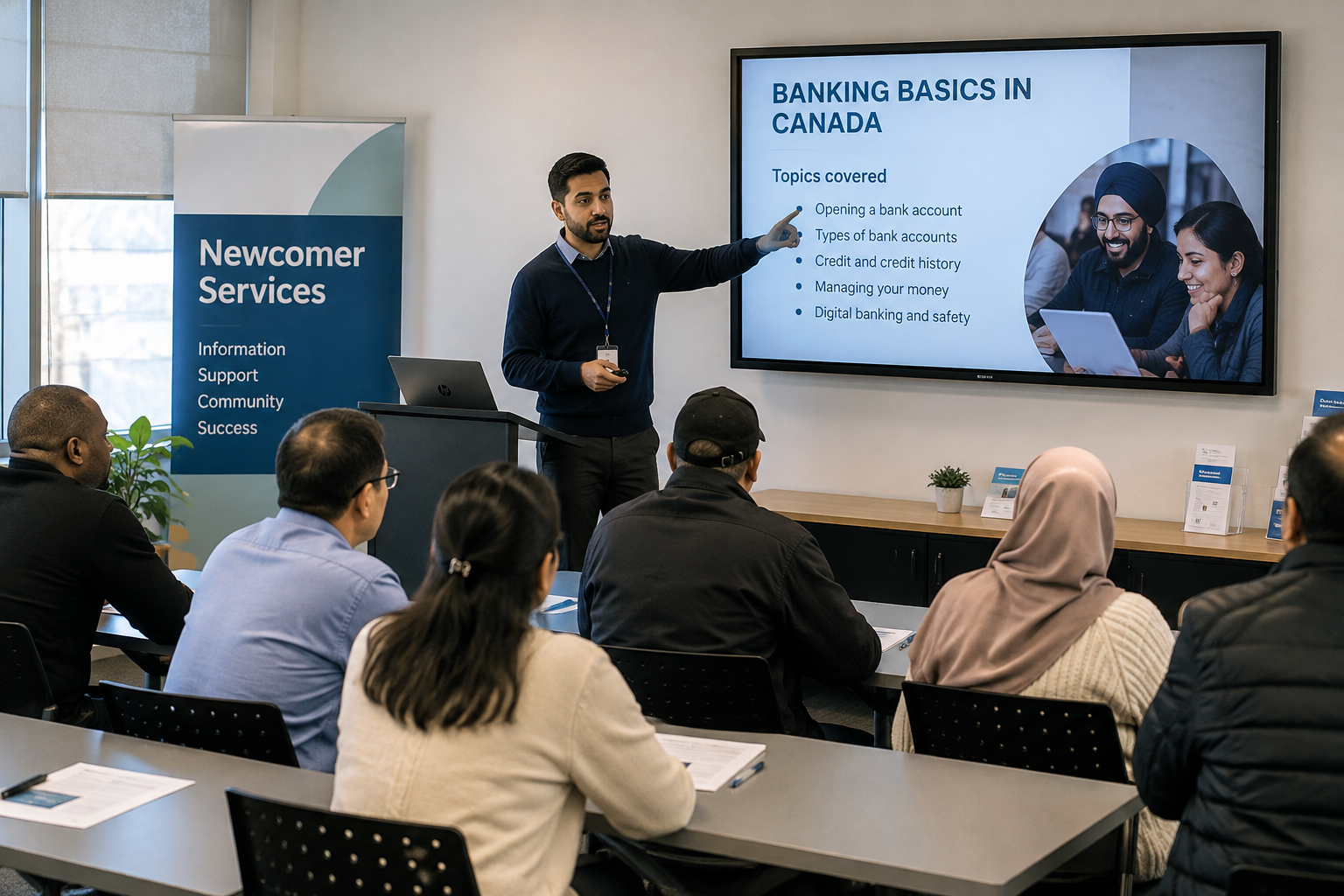
Understanding Canada's Financial System is a four-week educational program designed to help newcomers develop the practical financial knowledge needed to establish themselves successfully in Canada.
The program is strictly educational. Speakers and facilitators may explain financial products and services for educational purposes, but the seminar is not a sales event. Participants will not be solicited to purchase financial products or services.
WEEK 1 — BANKING IN CANADA: HOW THE SYSTEM WORKS
The first session introduces participants to the Canadian banking system and the financial tools they will encounter in everyday life.Participants learn about banks and credit unions; chequing and savings accounts; debit cards; ATMs; Interac e-Transfer; direct deposits and automatic payments; online and mobile banking; bank fees; overdrafts and NSF charges; and basic protection against banking fraud.
Practical outcome: Participants should leave understanding how to establish and manage their everyday banking relationship in Canada.
WEEK 2 — CREDIT: BUILDING YOUR FINANCIAL REPUTATION IN CANADA
Many newcomers arrive with income, education and professional experience but little or no Canadian credit history.
We explain why credit history matters and how the Canadian system works.
Topics include credit scores and credit reports; Equifax and TransUnion; credit cards; credit limits and utilization; interest rates; minimum payments; loans and lines of credit; financing; missed payments; collections; inquiries; and practical ways to establish and protect credit history.
We should also address common mistakes—for example, believing that carrying a credit-card balance improves a credit score.
Practical outcome: Participants understand that Canadian credit is not simply about borrowing money; it becomes part of their financial reputation and can affect important financial opportunities.
WEEK 3 — MANAGING MONEY IN CANADA
Week three moves into the household.
Participants learn how to build a realistic Canadian household budget and understand the expenses that may differ substantially from those in their country of origin.
Topics can include housing and utilities; transportation; insurance; groceries; telecommunications; taxes; debt payments; fixed versus variable expenses; emergency savings; managing cash flow; borrowing costs; and avoiding high-cost debt.We can include an exercise in which participants construct a sample Canadian monthly household budget.
Practical outcome: Participants leave with tools for making informed financial decisions and managing the cost of establishing a household in Canada.
WEEK 4 — BUILDING YOUR FINANCIAL FUTURE IN CANADA
The final session moves from surviving financially to planning forward.
Participants receive an introductory, educational overview of saving; emergency funds; Canadian taxation; CPP and OAS; registered accounts such as TFSA and RRSP; education savings; insurance concepts; investment basics; fraud and scams; identity protection; and when it may be appropriate to seek qualified professional advice.
The seminar concludes with participants preparing their own 90-DAY FINANCIAL ACTION PLAN.
A Four-Week Education and Support Seminar for Parents of Children with Special Needs
This program needs particularly careful positioning.TLCF is not presenting itself as diagnosing children or providing clinical therapy.
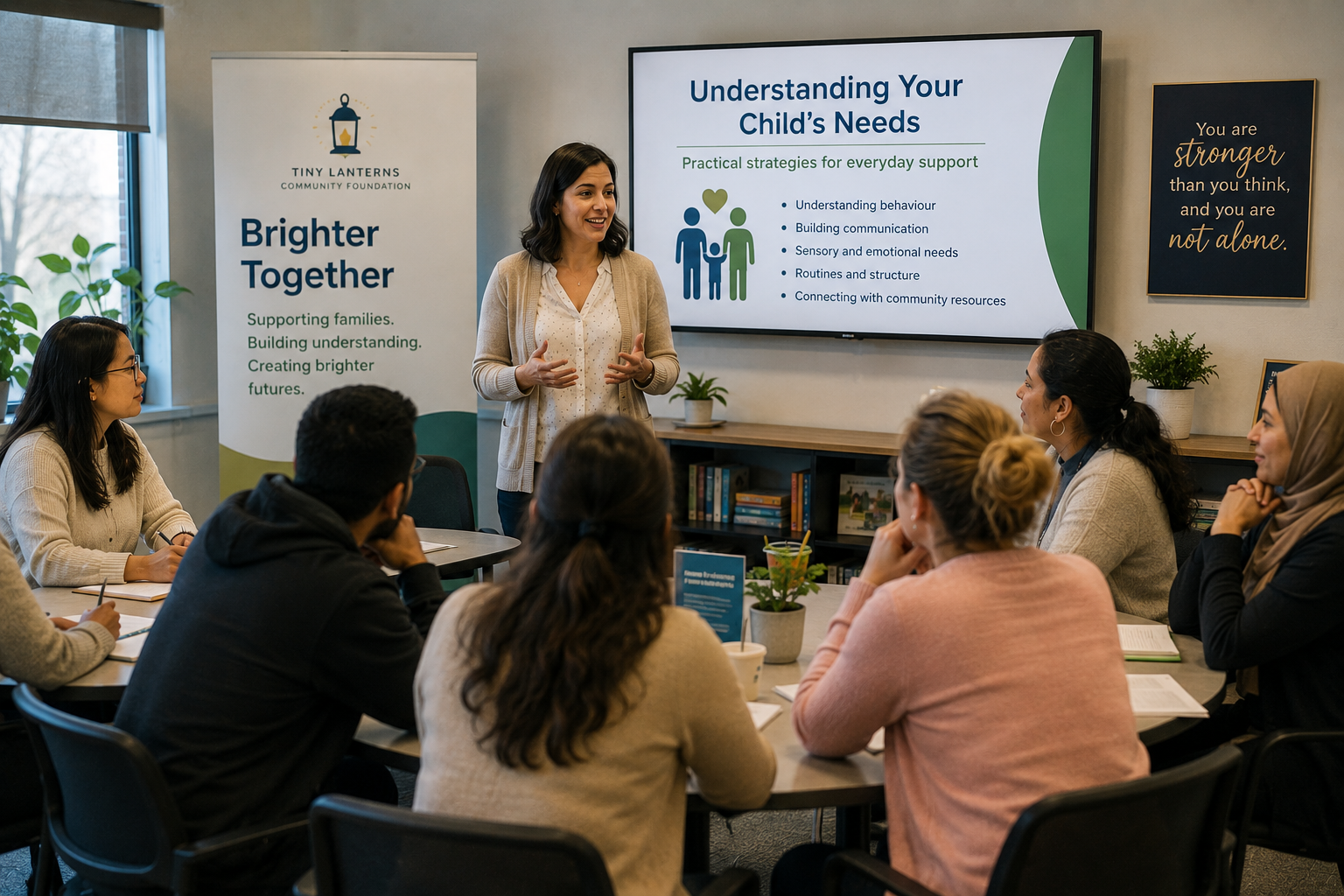
The program educates and supports parents, connects families with appropriate resources and professionals, and helps parents better understand and advocate for their children.
Week 1 — Understanding Your Child's NeedsParents are introduced to developmental, cognitive, sensory and neurodivergent needs and to the idea that children can experience and communicate with the world differently.
The session helps parents recognize strengths as well as challenges and understand why behaviour can sometimes be a form of communication.
The central message is: Understand the child before trying to change the behaviour.
Week 2 — Communication, Behaviour and Everyday Strategies
This becomes very practical.Parents learn about communication challenges, routines, transitions, sensory environments, emotional regulation and approaches that can make everyday family life more manageable.
A qualified professional could lead or contribute to this session so parents receive credible, evidence-informed information rather than generic parenting advice.
Week 3 — Navigating School, Services and Community Resources.
This is where TLCF can provide enormous practical value.
Parents often need to navigate schools, assessments, specialists, community organizations and government or community support systems.
The seminar explains how to ask questions, communicate with professionals, organize information, advocate constructively for a child and identify appropriate community resources.
We don't promise access to a particular service.
We help parents become better-informed navigators and advocates.
Week 4 — Supporting the Child, Supporting the Family
The final week broadens the focus.
Caring for a child with additional needs affects parents, siblings and the entire family.
Parents explore building support networks, communicating within the family, planning ahead, recognizing their own support needs and maintaining constructive relationships with professionals.
The seminar concludes with each family developing a simple Family Support Action Plan identifying priorities, questions, resources and next steps.
Program outcome:
Participants complete the four-week seminar with greater knowledge, a clearer understanding of available resources, and a personalized roadmap for the next steps they can take in supporting and advocating for their child.
Practical Take-Home Component:
THE FAMILY SUPPORT ACTION PLAN
Throughout the four-week seminar, parents will build a practical Family Support Action Plan tailored to the needs of their own family. The plan is designed to help participants organize what they have learned and identify realistic next steps after the seminar.
The Family Support Action Plan is an educational planning tool. It does not provide a diagnosis, treatment plan or clinical recommendation.
Where specialized assistance may be appropriate, participants will be encouraged to consult qualified professionals or appropriate community services.

Tiny Lanterns Community Foundation continues to develop charitable programs in response to community needs. As new programs are approved and become ready for implementation, additional opportunities to support our work will be added here.